
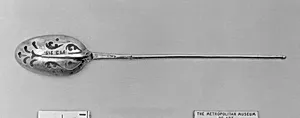
Strainer spoon
first half 18th century
Medium
Silver
Dimensions
Height: 5 3/8 in. (13.7 cm)
Classification
Metalwork-Silver
Culture
probably British, London
Department
European Sculpture and Decorative Arts
Museum
Metropolitan Museum of Art, New York, NY
Credit
Gift of Mrs. Samuel P. Avery, 1897
Accession Number
97.2.215
Rights
Public Domain
Art Historical Context
This elegant strainer spoon, crafted by the London silversmith S.T in the first half of 18th century, the refined metalwork of Georgian Britain. Standing at 5 3/8 inches (13.7 cm) tall, it was fashioned from silver, a precious medium prized for its luster and durability. Hallmarked for London, it reflects the city's status as a hub of high-quality silver production, where maker's marks like "S.T." denoted skilled artisans working under strict guild standards. Strainer spoons like this were essential tableware in affluent 18th-century households, used to skim and serve hot beverages such as tea or punch, or to strain sauces. The perforated bowl allowed liquids to pass while retaining solids, combining practicality with understated elegance. Silver objects were symbols of wealth and hospitality, often displayed as much as used, showcasing the era's growing consumer culture and colonial influences on British dining rituals. Now part of the Metropolitan Museum of Art's European Sculpture and Decorative Arts collection—thanks to a 1897 gift from Mrs. Samuel P. Avery—this piece invites us to appreciate the artistry in everyday luxury. Its survival highlights the enduring appeal of functional silver design from a time when craftsmanship met social sophistication.