
Street Scene in the Outskirts of Edo on an Evening in Winter
Kobayashi Kiyochika, ca. 1878
About this artwork
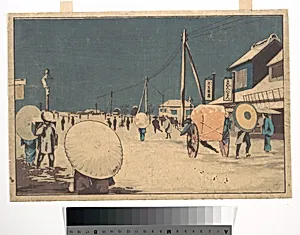
In the waning years of Japan's Edo period, as it transitioned into the modern Meiji era (1868–1912), Kobayashi Kiyochika captured the quiet poetry of everyday life in his woodblock print *Street Scene in the Outskirts of Edo on an Evening Winter* (ca. 1878). Edo, soon to be renamed Tokyo, was a bustling metropolis undergoing rapid Westernization, yet Kiyochika's scene evokes the serene outskirts—snow-dusted streets lined with humble houses, horse-drawn carriages, and bundled human figures hurrying home against a twilight sky. This intimate view reflects the artist's mastery of ukiyo-e, the "pictures of the floating world" genre that celebrated transient beauty amid social change. Printed with ink and color on paper in the traditional Japanese woodblock technique, the work measures a modest 9 5/32 x 13 5/8 inches, designed for affordable enjoyment by urban dwellers. Kiyochika, often called the "last great ukiyo-e master," innovated by incorporating subtle light and shadow effects inspired by Western art, lending a dramatic realism to the chilly winter atmosphere. Housed in the Metropolitan Museum of Art's Asian Art Department (Rogers Fund, 1918), this print offers a poignant glimpse into Meiji Japan's blend of old traditions and new horizons, inviting us to savor the hush of a winter evening.