
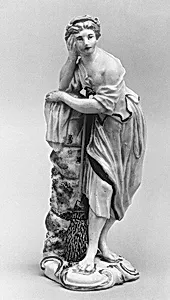
Street sweeper
Medium
Hard-paste porcelain
Dimensions
Height: 5 1/8 in. (13 cm)
Classification
Ceramics-Porcelain
Culture
German, Ludwigsburg
Department
European Sculpture and Decorative Arts
Museum
Metropolitan Museum of Art, New York, NY
Credit
Rogers Fund, 1933
Accession Number
33.109.1
Rights
Public Domain
Tags
Art Historical Context
This delightful porcelain figurine, *Street Sweeper*, crafted by the Ludwigsburg Porcelain Manactory in Germany between 1768 and 1778, captures the everyday grit and grace of 18th-century urban life.led by the skilled French sculptor Pierre-François Leune, who joined the manufactory in the 1760s, the piece stands just 5⅛ inches tall and depicts a woman diligently at work, broom in hand. Produced during the height of the Rococo era it reflects Ludwigsburg's ambition to rival renowned porcelain centers like Meissen by creating whimsical yet realistic figural sculptures. The use of hard-paste porcelain—a technically advanced, translucent material fired at high temperatures, akin to prized Chinese exports—allowed for intricate detailing in the woman's sweeping pose, textured clothing, and expressive face. This medium's durability and fine glaze made such small-scale genre scenes popular among Europe's aristocracy, who collected them as table decorations or cabinet pieces. Ludwigsburg specialized in these vivid portrayals of tradespeople and laborers, blending humor with social commentary on the working class. Today, housed in the Metropolitan Museum of Art's European Sculpture and Decorative Arts department (acquired via the Rogers Fund in 1933), *Street Sweeper* offers a charming glimpse into Enlightenment-era fascination with ordinary lives, elevated to artful porcelain poetry.