
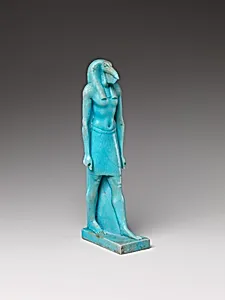
Striding Thoth
Unknown Artist
332–30 B.C.
Medium
Faience
Dimensions
H. 14.1 cm (5 9/16 in.); W. 3.6 cm (1 7/16 in.); D. 5.4 cm (2 1/8 in.)
Classification
Statuette, Thoth
Period
Ptolemaic Period
Department
Egyptian Art
Museum
Metropolitan Museum of Art, New York, NY
Credit
Purchase, Edward S. Harkness Gift, 1926
Accession Number
26.7.860
Rights
Public Domain
Tags
Art Historical Context
Behold the *Striding Thoth*, captivating faience figurine from Egypt's Ptolemaic Period332–30 B.C.), now gracing the Egyptian Art galleries at the Metropolitan Museum of Art. Crafted by an unknown artist, this petite sculpture—standing just 14.1 cm tall—depicts the god Thoth in a dynamic striding pose, likely as an ibis-headed deity or bird form, symbolizing his divine wisdom and mobility. Acquired through the Edward S. Hark Gift in 1926, it exemplifies the era's fusion of pharaonic traditions with Hellenistic influences under Ptolemaic rule. Faience, a glazed ceramic of crushed quartz, was prized in ancient Egypt for its brilliant turquoise hue, evoking the Nile's life-giving waters and the gods' eternal realm. This technique allowed for intricate details on small-scale objects like this one, perfect for amulets, votives, or household shrines. Thoth, patron of scribes, writing, and the moon, played a pivotal role in Egyptian mythology as inventor of hieroglyphs and judge of the afterlife—making this striding figure a potent emblem of intellect and protection. Though modest in size, *Striding Thoth* captures the Ptolemaic Period's artistic vitality, where everyday devotion met masterful craftsmanship. Visitors, pause to admire how its glossy surface still gleams, whispering tales of scribes and stars from over two millennia ago.