
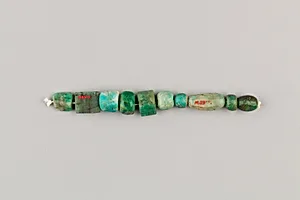
String of 10 beads
Unknown Artist
1st Century B.C. to 1st Century A.D.
Medium
Beryl
Dimensions
l. 11.5 cm (4 1/2 in.)
Classification
Beads, string
Period
Ptolemaic or Roman Period
Department
Egyptian Art
Museum
Metropolitan Museum of Art, New York, NY
Credit
Gift of Helen Miller Gould, 1910
Accession Number
10.130.2917
Rights
Public Domain
Art Historical Context
This delicate string of 10 beryl beads, dating from the 1st century.C. to the 1st century A.D., offers a glimpse into the refined jewelry traditions of Ptolemaic or Roman Egypt Crafted from beryl—a translucent gemstone prized for its and subtle green or blue hues—the beads measure 11.5 cm in length, suggesting they formed part of a necklace or amulet. Acquired as a gift from Helen Miller Gould in 1910, this piece now resides in the Metropolitan Museum of Art's Egyptian Art collection. In Ptolemaic Egypt, under Greek rulers like the Ptolemies, and later Roman influence, jewelry blended Egyptian motifs with Hellenistic and imperial styles. Beryl beads like these were laboriously cut and drilled by hand, showcasing advanced lapidary techniques that highlighted the stone's natural beauty. Such adornments were not mere decoration; they often held protective or symbolic value, warding off evil or signifying status in daily life and the afterlife. Though the artist remains unknown, the precision of these beads reflects the era's artisanal expertise, where gemstones symbolized prosperity and divine favor. Visitors can appreciate how everyday luxuries like this connected ancient Egyptians to their gods and rulers, bridging cultures across millennia.