
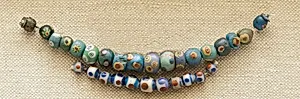
String of 18 Eyed Beads
Unknown Artist
1st Millennium BC–1st Millennium AD
Medium
Glass
Classification
Necklace, beads
Period
Third Intermediate Period–Islamic Period
Department
Egyptian Art
Museum
Metropolitan Museum of Art, New York, NY
Credit
Gift of Helen Miller Gould, 1910
Accession Number
10.130.3042
Rights
Public Domain
Art Historical Context
Nestled in the Metropolitan Museum of Art's Egyptian Art collection, this *String of 18 Ey Beads*—a generous gift from Helen Miller Gould 1910—spans an astonishing timeline from the Third Intermediate Period (c. 1070–664 BC) through the Islamic Period (up to the 1st millennium AD Crafted from vibrant glass by an unknown ancient artisan, these beads showcase Egypt's enduring mastery of glassmaking, a technique perfected as early as the New Kingdom and refined over centuries. The "eyed" design, featuring concentric circles mimicking watchful eyes, was a hallmark of Egyptian beadwork. These patterns not only added aesthetic appeal but held deep cultural significance as protective amulets, believed to ward off evil spirits and the malevolent gaze—a belief persisting from pharaonic times into later eras. Strung together, they likely formed part of a necklace or bracelet, adorning daily life or adorning the deceased for the afterlife. This delicate strand highlights the continuity of Egyptian craftsmanship across dynasties and cultures, from polytheistic rituals to Islamic influences. Its survival offers a tangible link to the Nile Valley's innovative artisans, reminding us how everyday objects carried profound symbolic weight in one of history's great civilizations.