
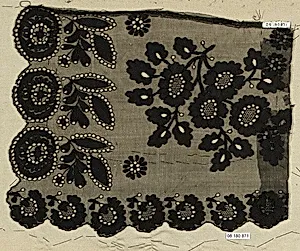
Strip
Unknown Artist
19th century
Medium
Machine net
Dimensions
L. 14 x W. 9 inches 35.6 x 22.9 cm
Classification
Textiles-Laces
Culture
Spanish
Department
European Sculpture and Decorative Arts
Museum
Metropolitan Museum of Art, New York, NY
Credit
The Nuttall Collection, Gift of Mrs. Magdalena Nuttall, 1908
Accession Number
08.180.871
Rights
Public Domain
Art Historical Context
This exquisite lace strip, hailing from 19th-century Spain, exemplifies the artistry of European textile traditions preserved in the Metropolitan Museum of Art's European Sculpture and Decorative Arts department. Measuring 14 by 9 inches (35.6 x 22.9 cm), it is crafted from machine net—a innovative material that marked a pivotal shift during the Industrial Revolution. Machine net provided a sturdy, affordable ground for lace patterns, blending mechanical precision with the lingering elegance of handmade designs, and was widely used for trims on garments, veils, and furnishings. In Spanish culture, lace held profound significance, symbolizing wealth, piety, and craftsmanship, often adorning mantillas for religious processions or fashionable attire. This strip reflects the era's transition from labor-intensive bobbin or needle lace to machine-assisted production, democratizing luxury while preserving intricate motifs. Likely produced in regions like Catalonia or Valencia, known for their lace heritage, it captures Spain's enduring textile legacy amid rapid modernization. A cherished piece from The Nuttall Collection, generously gifted by Mrs. Magdalena Nuttall in 1908, this strip invites visitors to appreciate the delicate interplay of technology and tradition in everyday opulence.