
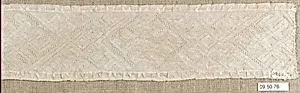
Strip
Unknown Artist
17th century
Dimensions
L. 14 3/4 x W. 3 inches (37.5 x 7.6 cm)
Classification
Textiles-Embroidered
Culture
German or Central European
Department
European Sculpture and Decorative Arts
Museum
Metropolitan Museum of Art, New York, NY
Credit
Rogers Fund, 1909
Accession Number
09.50.76
Rights
Public Domain
Art Historical Context
This delicate embroidered strip, hailing from 17th-century Germany or Central Europe, exemplifies the craftsmanship of Baroque-era textiles. Measuring just 14¾ by 3 inches, this narrow panel likely served as a decorative border for garments, altar cloths, or household linens, showcasing the era's fascination with opulent surface decoration. Acquired by The Metropolitan Museum of Art through Rogers Fund in 190, it resides in the European Sculpture andative Arts collection, highlighting the museum's commitment to preserving everyday artistry. Embroiderers of this period employed intricate stitching techniques—possibly including satin, chain, or metal-thread work—to create textured patterns that caught the light and conveyed status or piety. In Central Europe, such textiles reflected a blend of Protestant restraint and Catholic splendor, often featuring floral motifs, geometric designs, or symbolic imagery that bridged domestic life and religious devotion. Though the artist remains unknown, the strip's survival speaks to the skill of anonymous workshops, where women frequently led production. Today, this modest artifact invites us to appreciate the labor-intensive artistry behind 17th-century finery, reminding visitors how textiles wove together culture, faith, and fashion in everyday European life.