
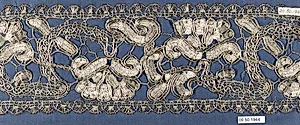
Strip
Unknown Artist
17th century
Medium
Bobbin lace
Dimensions
L. 16 x W. 5 3/4 inches (40.6 x 14.6 cm)
Classification
Textiles-Laces
Culture
Spanish
Department
European Sculpture and Decorative Arts
Museum
Metropolitan Museum of Art, New York, NY
Credit
Rogers Fund, 1909
Accession Number
09.50.1944
Rights
Public Domain
Art Historical Context
This exquisite *Strip* of bobbin lace, crafted by an unknown Spanish artist in 17th century, the pinnacle of Baroque-era textile artistry. Measuring 16 by 5¾ inches (40.6 x 14.6 cm), this narrow band was likely used as a decorative trimming for garments, furnishings, or ecclesiastical items, reflecting Spain's Golden Age prosperity under the Habsburgs. Acquired through the Rogers Fund in 1909, it now graces the Metropolitan Museum of Art's European Sculpture and Decorative collection. Bobbin lace, the medium here, is a labor-intensive technique where dozens of threads wound on bobbins are twisted, plaited, and pinned into intricate patterns over a pillow. Spanish lacemakers were renowned for their precision, producing delicate motifs that symbolized wealth and piety. In the 17th century, such laces adorned ruffled collars, cuffs, and altar cloths, blending functionality with opulent display amid Europe's lace mania. Though the artist's identity is lost to time, this piece highlights lace's role as a "white gold"—a high-value craft rivaling painting or jewelry. Visitors will appreciate its fine linen threads, woven with the patience of masters, offering a tactile glimpse into Spain's cultural splendor.