
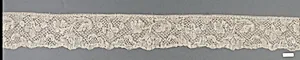
Strip
Unknown Artist
18th century
Medium
Bobbin lace
Dimensions
L. 32 x W. 3 1/2 inches 81.3 x 8.9 cm
Classification
Textiles-Laces
Culture
Flemish
Department
European Sculpture and Decorative Arts
Museum
Metropolitan Museum of Art, New York, NY
Credit
Purchase by subscription, 1909
Accession Number
09.68.298
Rights
Public Domain
Art Historical Context
Behold the exquisite *Strip*, a masterful example of 18th-century bobbin lace, crafted by an unknown artist. Measuring 32 by 3½ inches (81.3 x 8.9 cm), this slender length of textile artistry exemplifies the pinnacle of lace-making from Flanders, a region celebrated for its lace traditions. Housed in the Metropolitan Museum of Art's Department of European Sculpture and Decorative Arts, it was acquired through a 1909 purchase by subscription, underscoring its enduring appeal to collectors. Bobbin lace, the medium here, involves deftly twisting and intertwining fine linen threads using small bobbins—wooden spools that allow for complex, symmetrical patterns. Flemish lacemakers in the 18th century, centered in hubs like Brussels and Mechlin, produced pieces renowned for their density, precision, and floral motifs, often resembling intricate needlework but achieved through this unique plaiting technique. This *Strip* likely served as a decorative border for garments, linens, or furnishings, blending utility with opulence. In an era when lace signified wealth and status, Flemish exports influenced European fashion from royal courts to bourgeois homes. Today, this fragile treasure highlights the anonymous skill of artisan workshops, where generations honed techniques passed down through guilds, offering a tactile glimpse into Baroque-era craftsmanship and cultural prestige.