
Strip
Unknown Artist
17th century
Medium
Silk, bobbin lace
Dimensions
L. 32 3/4 x W. 4 inches (83.2 x 10.2 cm)
Classification
Textiles-Laces
Culture
Italian
Department
European Sculpture and Decorative Arts
Museum
Metropolitan Museum of Art, New York, NY
Credit
Gift of Mrs. Percy Chase, 1923
Accession Number
23.274
Rights
Public Domain
Tags
Art Historical Context
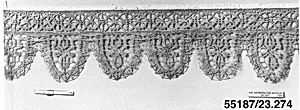
This exquisite silk bobbin lace strip, crafted by an unknown Italian artist in the 17 century, exemplifies the opulent decorative arts of the Baroque era. Measuring 32¾ by 4 inches, this slender length (83.2 x 10.2 cm) likely as an edging or insertion for elite garments, altar linens, or furnishings, where lace symbolized wealth and refinement. Its floral motifs, delicately woven into the fabric, capture the period's fascination with nature's abundance, rendered with the precision that made Italian lace a coveted luxury across Europe. Bobbin lace, or *punto a fuselli*, involved skilled lacemakers twisting silk threads on handheld bobbins to interlace intricate patterns without a supporting cloth— a labor-intensive technique requiring extraordinary patience and expertise. In 17th-century Italy, centers like Venice and Milan produced such masterpieces, blending artistry with technical innovation. This piece highlights the medium's significance in textiles, bridging fashion and fine art. Generously gifted to the Metropolitan Museum of Art in 1923 by Mrs. Percy Chase, the *Strip* invites visitors to marvel at the anonymous genius behind everyday elegance. Up close, its shimmering silk threads reveal a frozen garden of blooms, whispering tales of Renaissance ingenuity preserved for modern eyes.