
Strip
Unknown Artist
16th century
Medium
Silk on linen
Dimensions
L. 9 1/8 x W. 25 inches (23.2 x 63.5 cm)
Classification
Textiles-Embroidered
Culture
Italian
Department
European Sculpture and Decorative Arts
Museum
Metropolitan Museum of Art, New York, NY
Credit
Gift of Mrs. Harry G. Friedman, 1948
Accession Number
48.57
Rights
Public Domain
Tags
Art Historical Context
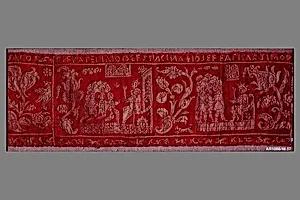
This exquisite embroidered strip, created by an unknown Italian artist in the 16th century showcases the Renaissance mastery of textile arts. Measuring a slender 9⅛ × 25 inches, it's crafted from vibrant silk threads on a linen, featuring intricate motifs of animals,, and human figures. lively scenes likely served as decorative borders for garments, furnishings, or ecclesiastical textiles, reflecting the era's love for naturalistic designs inspired by the natural world and classical antiquity. In Renaissance Italy, embroidery was a prestigious craft, often produced in workshops or by skilled needlewomen, blending artistry with technical virtuosity. The use of silk allowed for rich colors and fine detailing—shades of red, blue, and gold that would have shimmered in candlelight—symbolizing wealth and piety. Such pieces adorned cassoni (wedding chests), altarpieces, or clerical vestments, merging beauty with storytelling to elevate everyday objects into treasures. Today, this "Strip" graces the Metropolitan Museum of Art's European Sculpture and Decorative Arts collection, a gift from Mrs. Harry G. Friedman in 1948. It invites us to appreciate the anonymous hands behind Italy's decorative legacy, where thread became a canvas for imagination and cultural splendor.