
Strip
Unknown Artist
18th century
Medium
Linen; embroidered in silk and silver thread
Dimensions
L. 70 1/2 in. (179.1 cm) W. 13 1/2 in. (34.3 cm)
Classification
Textiles-Embroidered
Department
Islamic Art
Museum
Metropolitan Museum of Art, New York, NY
Credit
Gift of Mrs. Leonard E. Opdycke, 1928
Accession Number
28.109.14
Rights
Public Domain
Tags
Art Historical Context
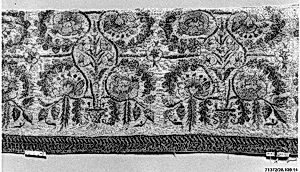
This exquisite embroidered strip, dating to the 18th, hails from the Islamic world and showcases the artistry of an unknown embroiderer. Crafted from fine linen and adorned with silk and shimmering silver threads, the long, narrow panel—measuring over 5 feet in length and about 13 inches wide— served as a decorative border for garments, furnishings, or ceremonial textiles. Its floral motifs, a hallmark of Islamic decorative arts, evoke the lush gardens of paradise, a recurring theme symbolizing beauty, abundance, and spiritual harmony. In the context of 18th-century Islamic textiles, such embroideries represent masterful needlework techniques, where artisans skillfully layered silk for vibrant color and silver thread for luxurious metallic gleam. These pieces were prized for their opulence, often produced in workshops across regions like the Ottoman Empire, Persia, or India, blending functionality with aesthetic splendor. The use of metal threads not only enhanced visual appeal under candlelight but also signified wealth and status. Today, this rare survivor graces the Metropolitan Museum of Art's Islamic Art collection, a generous 1928 gift from Mrs. Leonard E. Opdycke. It invites visitors to appreciate the enduring elegance of Islamic textile traditions, where every stitch tells a story of cultural refinement and craftsmanship.