
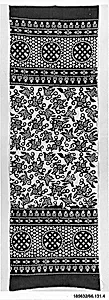
Strip
Unknown Artist
19th century
Medium
Indigo; cotton
Dimensions
47 3/4 x 14 3/4 in. (121.29 x 37.47 cm)
Classification
Textiles-Painted and Printed
Culture & Period
China · Qing dynasty (1644–1911)
Department
Asian Art
Museum
Metropolitan Museum of Art, New York, NY
Credit
Seymour Fund, 1966
Accession Number
66.131.4
Rights
Public Domain
Art Historical Context
This slender textile strip, simply titled *Strip*, originates from 19th-century China the Qing dynasty (164–1911), the last imperial era renowned for its artistic refinement and cultural splendor. Created by an unknown artist using indigo dye cotton, it measures 47 3/4 x 14 3/4 inches (121.29 37.47 cm). Housed in the Metropolitan Museum Art's Asian Art Department—acquired through the Seymour Fund in 6—this piece exemplifies the era's painted and printed textiles, where everyday materials were transformed into objects of beauty and utility. Indigo, derived from plants and a staple in Asian dyeing traditions, produces the deep, enduring blues that evoke the night sky and imperial elegance in Chinese art. The cotton medium, lightweight and versatile, was ideal for clothing, hangings, or decorative bands, highlighting Qing artisans' skill in resist techniques or block printing to create precise patterns resistant to dye. These methods allowed for intricate designs that symbolized prosperity, nature, or folklore, blending functionality with aesthetic harmony. As a cultural artifact, this strip reflects China's textile legacy, where such works were integral to social rituals and trade. Its narrow form invites us to appreciate the subtlety of Qing craftsmanship, offering museum visitors a tangible connection to a dynasty's fading grandeur.