
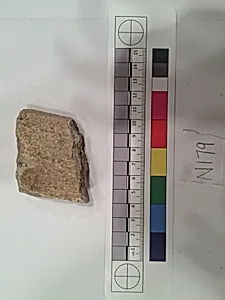
Stucco Fragment
Unknown Artist
probably 8th–12th century
Medium
Stucco; carved, painted
Dimensions
H. 2 3/8 in. (6 cm) W. 1 15/16 in. (5 cm) D. 1 in. (2.5 cm)
Classification
Stucco
Department
Islamic Art
Museum
Metropolitan Museum of Art, New York, NY
Credit
Rogers Fund, 1948
Accession Number
48.101.481
Rights
Public Domain
Art Historical Context
### Stucco Fragment This delicate stucco fragment, likely from the 8th to 12th century, a glimpse into the refined artistry of early Islamic architecture. Measuring just 2⅜ inches high, it was part of a larger decorative scheme, possibly adorning the walls of a palace, mosque, or elite residence in regions like Iraq, Iran, or Central Asia during the Abbasid or Seljuk periods. Stucco, a molded plaster made from gypsum or lime, was a favored medium in Islamic art for its versatility—easily carved into intricate patterns and painted for vibrant color—making grand ornamentation accessible without costly stone. Carved and painted by an unknown artisan, the fragment exemplifies techniques honed over centuries: fine incising for motifs like arabesques, geometrics, or floral designs, then layered with pigments for depth and luminosity. These elements symbolized paradise gardens or cosmic order, blending artistry with spiritual resonance. Acquired through the Rogers Fund in 1948, it resides in the Metropolitan Museum of Art's Islamic Art department, reminding us how everyday materials elevated sacred and secular spaces. Though small, this piece highlights stucco's enduring role in Islamic decorative traditions, bridging utility and beauty across empires.