
Stucco Fragment
Unknown Artist
probably 8th–12th century
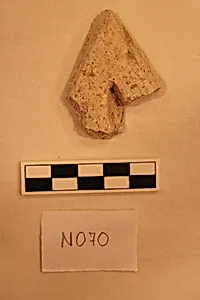
Medium
Stucco; carved and painted
Dimensions
H. 1 3/4 in. (4.5 cm) W. 1 3/8 in. (3.5 cm) D. 9/16 in. (1.5 cm)
Classification
Stucco
Department
Islamic Art
Museum
Metropolitan Museum of Art, New York, NY
Credit
Rogers Fund, 1948
Accession Number
48.101.372
Rights
Public Domain
Art Historical Context
This delicate stucco fragment, likely crafted between the 8th and 12th centuries, offers a glimpse into the refined world of Islamic architectural decoration. Measuring just 1¾ inches high, 1⅜ inches wide, and /16 inches deep, it exemplifies the exquisite miniaturization of artistry from this era. Acquired through the Rogers Fund in 1948 and housed in the Metropolitan Museum of's Islamic Art department, piece was carved and painted, techniques that allowed artisans to create intricate textures and vibrant colors on otherwise plain surfaces. In early medieval Islamic culture, stucco was a favored medium for adorning mosques, palaces, and tombs across regions like Persia and Central Asia. Artisans molded wet plaster, carved it with fine tools to form geometric patterns, arabesques, or vegetal motifs, and then applied paints—often in reds, blues, and golds—for added luminosity. This fragment's survival highlights the fragility of such decorations, which once enlivened vast interiors, reflecting a sophisticated aesthetic that emphasized harmony, repetition, and spiritual symbolism over human figures. Though small, this artifact underscores the technical mastery and cultural flourishing of the Islamic Golden Age, inviting us to imagine the grandeur it once complemented. A testament to anonymous genius, it reminds visitors of art's power to preserve history in the tiniest forms.