
Stucco Fragment
Unknown Artist
probably 8th–12th century
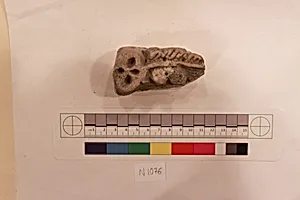
Medium
Stucco; carved
Dimensions
H. 3 1/8 in. (8 cm) W. 1 9/16 in. (4 cm) D. 2 3/16 in. (5.5 cm)
Classification
Stucco
Department
Islamic Art
Museum
Metropolitan Museum of Art, New York, NY
Credit
Rogers Fund, 1948
Accession Number
48.101.1378
Rights
Public Domain
Art Historical Context
This delicate stucco fragment, likely carved between the 8th and 12th centuries, a glimpse into the refined world of Islamic architectural decoration. Measuring just 3⅛ inches high, 1⅝ inches, and 2¼ inches deep, it exemplifies the exquisite craftsmanship of artisans in the early medieval Islamic world, where stucco—a molded and carved plaster—was prized for its versatility and affordability. Often used to adorn mosques, palaces, and tombs, such fragments typically featured intricate geometric patterns, arabesques, or vegetal motifs, transforming humble surfaces into shimmering displays of artistry. The carving technique involved shaping wet plaster over a core, then incising fine details before it hardened, allowing for deep reliefs and delicate undercuts that caught the light beautifully. Dating to a formative era of Islamic art—spanning Abbasid, Fatimid, or regional styles—this piece highlights how stucco mimicked pricier stone or wood carvings, democratizing opulence across the vast Islamic realms from Spain to Central Asia. Acquired through the Rogers Fund in 1948 and housed in the Metropolitan Museum of Art's Islamic Art Department, this tiny survivor invites us to marvel at the ingenuity of anonymous creators whose work defined an enduring aesthetic legacy. What stories might its missing patterns tell?