
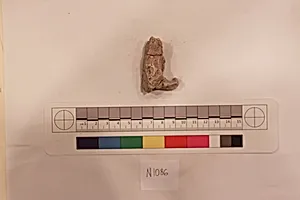
Stucco Fragment
Unknown Artist
probably 8th–12th century
Medium
Stucco; carved
Dimensions
H. 1 15/16 in. (5 cm) W. 1 3/8 in. (3.5 cm) D. 13/16 in. (2 cm)
Classification
Stucco
Department
Islamic Art
Museum
Metropolitan Museum of Art, New York, NY
Credit
Rogers Fund, 1948
Accession Number
48.101.1388
Rights
Public Domain
Art Historical Context
This delicate stucco fragment, carved by an unknown artist probably between the 8th and 12th centuries, offers a glimpse into the refined world of early Islamic architecture. Housed in the Metropolitan Museum of Art's Department of Islamic Art and acquired through the Rogers Fund in 8, its petite dimensions—standing just under 2 inches tall—suggest it once adorned a larger structure, such as a mosque,, or mihrab niche. During this expansive era of Islamic caliphates, from the Abbasids to the Seljuks, such fragments were ubiquitous in regions like Iran, Iraq, and Central Asia, contributing to the opulent interiors that blended spirituality with artistry. Stucco, a molded and carved plaster-like material, was prized for its affordability and malleability, allowing artisans to create intricate reliefs with tools alone—no pigments needed. This technique enabled lightweight, durable decorations that could mimic more precious stone carving, democratizing beauty across grand buildings. Though worn by time, our fragment exemplifies the anonymous mastery of Islamic craftsmen, whose work emphasized harmony, geometry, and vegetal motifs to evoke paradise gardens. Pause before this tiny survivor and imagine the bustling workshops and prayer halls it graced. It reminds us how even small pieces preserve the cultural splendor of a golden age.