
Stucco Fragment
Unknown Artist
probably 8th–12th century
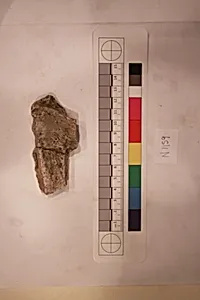
Medium
Stucco; carved
Dimensions
H. 3 3/8 in. (8.5 cm) W. 1 9/16 in. (4 cm) D. 9/16 in. (1.5 cm)
Classification
Stucco
Department
Islamic Art
Museum
Metropolitan Museum of Art, New York, NY
Credit
Rogers Fund, 1948
Accession Number
48.101.1461
Rights
Public Domain
Art Historical Context
This delicate stucco fragment, carved by an unknown artist probably between the 8th and 12th centuries, offers a glimpse into the refined world of early Islamic architecture. Measuring just 3⅜ inches high, 1⅝ inches wide, and ⅝ inch deep, it likely originated from a larger decorative panel adorning a mosque, palace or madrasa in regions like Iraq, Iran, or Central Asia. Acquired through the Rogers Fund in 8, it now resides the Metropolitan Museum of Art's Department of Islamic Art, exempl the medium's enduring appeal. Stucco, a molded plaster made from lime, sand, and water, was prized in Islamic art for its versatility and affordability compared to stone carving. Artisans skillfully incised intricate patterns—often geometric, floral arabesques, or Kufic script—creating low-relief designs that played with light and shadow. This fragment highlights the period's mastery of such techniques, bridging the Umayyad and Abbasid eras when architectural decoration flourished amid expanding Islamic empires. Though small, its survival underscores the cultural importance of ephemera in preserving history. These fragments reveal a sophisticated aesthetic prioritizing harmony, repetition, and spiritual symbolism, inviting visitors to ponder the grandeur of lost monuments.