
Stucco Fragment
Unknown Artist
probably 8th–12th century
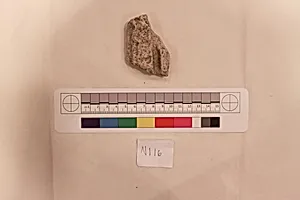
Medium
Stucco; carved and painted
Dimensions
H. 2 9/16 in. (6.5 cm) W. 1 3/4 in. (4.5 cm) D. 13/16 in. (2 cm)
Classification
Stucco
Department
Islamic Art
Museum
Metropolitan Museum of Art, New York, NY
Credit
Rogers Fund, 1948
Accession Number
48.101.418
Rights
Public Domain
Art Historical Context
This delicate stucco fragment, dating to the 8th–12th, offers a glimpse into the refined world of Islamic architectural decoration. Crafted from stucco—a molded plaster made from lime, sand, and water—it measures just 2 9/16 inches high hinting at its origin as part of a larger ornate panel or wall relief in a mosque, palace, or elite residence. Acquired through the Rogers Fund in 1948, it now resides in the Metropolitan Museum Art's Department of Islamic Art, showcasing the era's mastery of ephemeral yet enduring materials. Artisans carved intricate patterns into the still-wet stucco, allowing for fluid, lace-like designs often featuring geometric motifs, arabesques, or floral elements—hallmarks of Islamic art that evoke infinity and paradise without depicting human figures. The addition of paint heightened its vibrancy, with colors likely applied to accentuate shadows and depths, transforming flat surfaces into shimmering illusions of movement. This technique flourished across regions like Iran, Iraq, and North Africa during the Abbasid and Fatimid periods, when stucco became a versatile, affordable medium for sumptuous interiors. Though small, this fragment embodies the cultural splendor of medieval Islamic civilization, where decoration served spiritual and aesthetic purposes. It invites us to ponder the skilled hands behind it, preserving a whisper of opulence from a bygone golden age.