
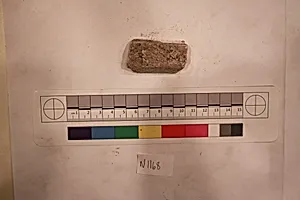
Stucco Fragment
Unknown Artist
probably 8th–12th century
Medium
Stucco; carved
Dimensions
H. 1 3/4 in. (4.5 cm) W. 1 in. (2.5 cm) D. 3/8 in. (1 cm)
Classification
Stucco
Department
Islamic Art
Museum
Metropolitan Museum of Art, New York, NY
Credit
Rogers Fund, 1948
Accession Number
48.101.1470
Rights
Public Domain
Art Historical Context
This delicate stucco fragment, carved from plaster in the 8th–12th, offers a glimpse into the refined artistry of early Islamic architecture. Measuring just 1¾ inches high, it is a tiny survivor from a larger decorative ensemble, likely adorning the walls, niches, or mihrabs of mosques, palaces, or madrasas in regions like Iraq or Iran during the Abbasid Seljuk eras. Acquired through the Rogers Fund in 8, it now resides in the Metropolitan of Art's Department of Islamic Art, preserving piece of the Islamic world's architectural splendor. Stucco was a favored medium in Islamic decoration due to its versatility—moldable when wet and precisely carvable when dry—allowing artisans to create intricate patterns without the expense of stone. Craftsmen incised motifs such as arabesques, geometric interlaces, or Kufic script, embodying the era's emphasis on aniconism and mathematical harmony. Though worn by time, this fragment exemplifies the technical mastery that transformed humble plaster into luminous, light-reflecting surfaces, enhancing sacred and secular spaces. For visitors, it whispers of a golden age when art served spirituality and splendor, reminding us how even the smallest relic can illuminate centuries of cultural ingenuity.