
Stucco Fragment
Unknown Artist
probably 8th–12th century
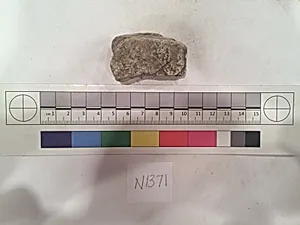
Medium
Stucco (mortar); carved, painted
Dimensions
L 5x W 3x H 2
Classification
Stucco
Department
Islamic Art
Museum
Metropolitan Museum of Art, New York, NY
Credit
Rogers Fund, 1948
Accession Number
48.101.1673
Rights
Public Domain
Art Historical Context
This delicate stucco fragment, likely from the 8th–12th century, offers a glimpse into the architectural splendor of the Islamic world. Crafted from mortar-based stucco—a versatile medium prized for its moldability—this small piece (5 x 3 x 2 inches) was carved in low relief and vividly painted, techniques that allowed artisans to create intricate decorations affordably compared to stone. Such fragments often adorned mosques, palaces, or madrasas, transforming plain walls into vibrant tapestries of pattern and color. In the Islamic artistic tradition of this era, spanning the Abbasid Caliphate and regional dynasties, stucco served as a canvas for geometric motifs, floral arabesques, and sometimes calligraphy, embodying the aniconic aesthetic that emphasized abstraction and infinity. The combination of carving and paint heightened its visual impact, catching light to evoke movement and depth. Acquired through the Rogers Fund in 1948, this artifact from the Metropolitan Museum of Art's Islamic Art collection underscores the technical ingenuity and cultural refinement of medieval Muslim builders, who used everyday materials to achieve monumental beauty. Though its exact provenance remains unknown, it whispers of bustling cities like Baghdad or Samarra, where such embellishments defined sacred and secular spaces.