
Stucco Fragment
Unknown Artist
probably 8th–12th century
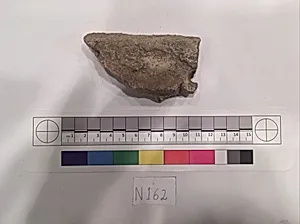
Medium
Stucco; carved, painted
Dimensions
H. 3 3/8 in. (8.5 cm) W. 1 15/16 in. (5 cm) D. 13/16 in. (2 cm)
Classification
Stucco
Department
Islamic Art
Museum
Metropolitan Museum of Art, New York, NY
Credit
Rogers Fund, 1948
Accession Number
48.101.464
Rights
Public Domain
Art Historical Context
This delicate stucco fragment, dating to the 8th–12th century, a glimpse into the refined artistry of early Islamic architecture. Likely originating from a mosque, palace, or structure in the Islamic world—possibly regions like Iran or Iraq—it exemplifies the era's penchant for ornate decoration that adorned walls and niches. Though small (just 3⅜ inches high), its survival speaks to the enduring craftsmanship of anonymous artisans who transformed humble plaster into architectural splendor. Crafted from stucco—a molded plaster of Paris mixed with lime and aggregates—the fragment was intricately carved with geometric or vegetal motifs (typical of the period) and then painted for vibrant color and depth. This technique allowed builders to mimic costly stone carving affordably, democratizing beauty across grand Islamic monuments during the Abbasid and subsequent dynasties. The painted surfaces, now faded, once gleamed with pigments, enhancing light play in sunlit interiors. Housed in the Metropolitan Museum of Art's Islamic Art Department (acquired via the Rogers Fund in 1948), this piece invites visitors to ponder the ingenuity of medieval Islamic decorators, whose subtle elegance continues to inspire modern design.