
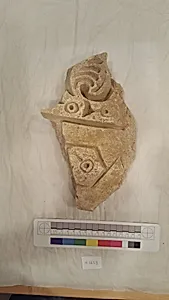
Stucco Fragment
Unknown Artist
probably 8th–12th century
Medium
Stucco; carved, painted
Dimensions
L 24 x W 15 x H 5.5
Classification
Stucco
Department
Islamic Art
Museum
Metropolitan Museum of Art, New York, NY
Credit
Rogers Fund, 1948
Accession Number
48.101.1955
Rights
Public Domain
Art Historical Context
This delicate stucco fragment, likely from the 8th to 12th century, a glimpse into the opulent architectural decorations of the Islamic world. Housed in the Metropolitan Museum of Art's Islamic department, it exemplifies the era's masterful use of stucco—a molded plaster material prized for its versatility and affordability compared to stone or marble. Such fragments often adorned mosques, palaces, and madrasas across regions like Iraq, Iran, or Egypt, during the Abbasid or Fatimid periods, where they contributed to lavish interior walls and mihrabs. Crafted through intricate carving techniques, the fragment's surface bears traces of both relief work and original paint, highlighting the artisans' skill in creating depth, texture, and vibrant color. Paint added life to the carvings, enhancing motifs that symbolized paradise gardens or geometric harmony central to Islamic aesthetics. Though incomplete, its modest dimensions (24 x 15 x 5.5 cm) underscore the precision required for large-scale ensembles. As a Rogers Fund acquisition from 1948, this piece preserves a fragment of a lost splendor, inviting visitors to appreciate the anonymous genius behind Islamic ornamental art—where form, faith, and beauty intertwined seamlessly.