
Stucco Fragment
Unknown Artist
probably 8th–12th century
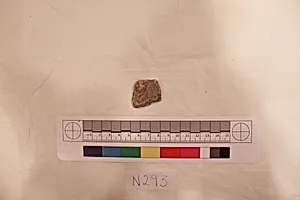
Medium
Stucco; carved, painted (?)
Dimensions
H. 1 3/16 in. (3 cm) W. 1 in. (2.5 cm) D. 3/16 in. (.5 cm)
Classification
Stucco
Department
Islamic Art
Museum
Metropolitan Museum of Art, New York, NY
Credit
Rogers Fund, 1948
Accession Number
48.101.595
Rights
Public Domain
Art Historical Context
This delicate stucco fragment, likely carved and painted from the 8th to 12th century, a glimpse into the refined world of early Islamic architecture. Measuring just 1 3/16 inches high, 1 inch wide, and /16 inches deep, is a tiny survivor from a grander structure—perhaps a palace wall, mosque niche, or mihrab. Acquired through the Rogers Fund in 1948, it resides in the Metropolitan Museum of Art's Islamic Art department, where such fragments evoke the splendor of medieval Islamic craftsmanship. Stucco, a molded plaster made from lime, sand, and water, was a versatile and affordable medium in the Islamic world, allowing artisans to create intricate low-relief carvings that rivaled stone or wood. During this period, spanning the Abbasid and Fatimid eras, decorators favored vegetal motifs, geometric patterns, and arabesques, often enlivened with vibrant paints now faded. Though the exact design here is subtle due to its size, it exemplifies how stucco democratized opulence, adorning public and private spaces across Persia, Iraq, and Egypt. For visitors, this unassuming piece whispers of cultural exchange along the Silk Road, where techniques blended Byzantine, Sasanian, and local traditions. It reminds us that Islamic art's genius lies in abstraction and rhythm, transforming everyday materials into timeless beauty.