
Stucco Fragment
Unknown Artist
probably 8th–12th century
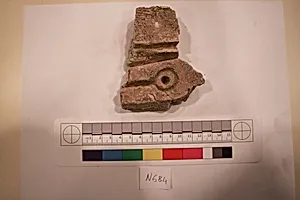
Medium
Stucco; carved
Dimensions
H. 3 9/16 in. (9 cm) W. 3 1/8 in. (8 cm) D. 1 3/16 in. (3 cm)
Classification
Stucco
Department
Islamic Art
Museum
Metropolitan Museum of Art, New York, NY
Credit
Rogers Fund, 1948
Accession Number
48.101.986
Rights
Public Domain
Art Historical Context
This delicate stucco fragment, carved by an unknown artist likely between the 8th and 12th centuries, offers a glimpse into the refined architectural decorations of the Islamic world. just 3 9/16 inches high, 3 1/8 inches wide, 1 3/16 inches deep, it survives as a modest remnant of a larger ensemble, acquired through the Rogers Fund in 1948 and now in the Metropolitan Museum of's Department of Islamic Art. Stucco, a versatile plaster-like material, was a favored medium in early Islamic architecture across regions like Iran, Iraq, and Central Asia. Artisans skillfully carved it into intricate patterns—often geometric, floral, or calligraphic motifs—to adorn mosques, palaces, and tombs. This technique allowed for lightweight, moldable embellishments that mimicked more precious stone carvings, democratizing opulent design during the Abbasid and subsequent dynasties. Though small, this fragment embodies the cultural emphasis on aniconism and mathematical harmony in Islamic art, where surface decoration elevated everyday spaces into spiritual realms. Visitors can appreciate how such pieces contributed to the immersive beauty of medieval Islamic interiors, bridging artistry and devotion.