
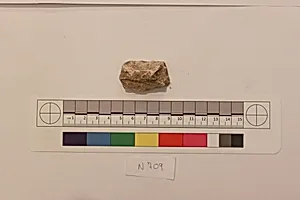
Stucco Fragment
Unknown Artist
probably 8th–12th century
Medium
Stucco; carved
Dimensions
H. 1 3/4 in. (4.5 cm) W. 1 in. (2.5 cm) D. 13/16 in. (2 cm)
Classification
Stucco
Department
Islamic Art
Museum
Metropolitan Museum of Art, New York, NY
Credit
Rogers Fund, 1948
Accession Number
48.101.1011
Rights
Public Domain
Art Historical Context
This delicate stucco fragment, carved with exquisite precision, hails from the Islamic world between the 8th and 12th centuries—a golden era of architectural splendor under dynasties like the Abbasids Seljuks. Measuring just 1¾ inches high, 1 inch wide, and /16 inches deep, it once adorned a wall, niche, or mihrab in a mosque, palace, or private home. Acquired through the Rogers Fund in 8, it now graces the Metropolitan Museum of Art Department of Islamic Art, offering a tangible link to a vibrant cultural heritage. Stucco, a versatile plaster-like material made from lime, sand, and water, was a favored medium in Islamic architecture where stone was scarce or costly. Artisans molded it into panels or carved intricate motifs—often geometric patterns, arabesques, or floral designs—evoking paradise gardens from the Quran. This fragment exemplifies low-relief carving techniques, where tools incised fine details into wet or hardened stucco, creating shadow-play effects under flickering lamplight. Though small and anonymous, such fragments reveal the ingenuity of Islamic decorators, who transformed everyday surfaces into meditative art. They remind us how non-figural designs fostered spiritual contemplation, influencing crafts from Spain to India. A tiny treasure, it invites you to imagine the grand halls it once embellished.