
Stucco Fragment
Unknown Artist
probably 8th–12th century
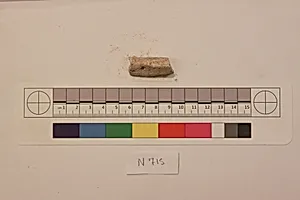
Medium
Stucco; carved, painted (?)
Dimensions
H. 1 3/8 in. (3.5 cm) W. 3/8 in. (1 cm) D. 9/16 in. (1.5 cm)
Classification
Stucco
Department
Islamic Art
Museum
Metropolitan Museum of Art, New York, NY
Credit
Rogers Fund, 1948
Accession Number
48.101.1017
Rights
Public Domain
Art Historical Context
This delicate stucco fragment, likely from the 8th to 12th century, offers a glimpse into the refined architectural artistry of the Islamic world. Carved and possibly painted, it measures just 1 3/8 inches high, hinting at its role as part of a larger decorative ensemble—perhaps adorning a mosque, palace, or madrasa. Acquired through the Rogers Fund in 1948, it resides in the Metropolitan Museum of's Islamic Art department, such fragments preserve the ephemeral beauty of medieval structures. In Islamic architecture during this expansive era—from the Abbasid Caliphate to the Seljuk period—stucco was prized for its versatility. Easily molded, carved, and colored, it allowed artisans to create intricate motifs like arabesques, geometric patterns, or vegetal designs that evoked paradise gardens. The (?) notation for paint suggests vibrant polychromy, enhancing light play and spiritual ambiance in sacred spaces. Though tiny, this fragment embodies the cultural zenith of Islamic decorative arts, where craftsmanship celebrated harmony and infinity without figurative representation. It invites us to imagine the grand halls it once graced, a testament to enduring ingenuity.