
Stucco Fragment
Unknown Artist
probably 8th–12th century
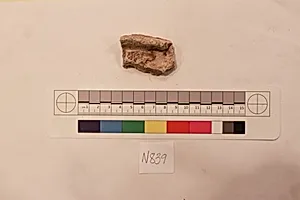
Medium
Stucco; carved
Dimensions
H. 1 15/16 in. (5 cm) W. 1 3/16 in. (3 cm) D. 1 in. (2.5 cm)
Classification
Stucco
Department
Islamic Art
Museum
Metropolitan Museum of Art, New York, NY
Credit
Rogers Fund, 1948
Accession Number
48.101.1141
Rights
Public Domain
Art Historical Context
This delicate stucco fragment, likely from the 8th to 12th century, a glimpse into the refined architectural decoration of the Islamic world. Crafted during a golden age of Islamic art—spanning the Abbasid and Fatimid eras—this tiny piece (just under 2 inches tall) probably once adorned a mosque, palace or mihrab niche in regions like Iraq, Iran, Egypt. Stucco, a versatile plaster-like material made from gypsum or lime, was prized for its moldability and affordability, allowing artisans to create intricate embellishments on otherwise plain surfaces. The fragment's carved surface exemplifies the masterful low-relief techniques of Islamic sculptors, who incised motifs such as geometric patterns, arabesques, or floral vines into the semi-dry stucco before it fully hardened. These designs reflect the era's aniconic aesthetic, avoiding human or animal figures in favor of harmonious, repeating forms that evoke infinity and spiritual contemplation—a hallmark of Islamic decorative arts. Though small and anonymous, this survivor from the Rogers Fund collection at The Metropolitan Museum of Art underscores the portability and enduring appeal of Islamic craftsmanship. Visitors can imagine it as part of vast, shimmering walls that transformed humble materials into transcendent beauty.