
Stucco Fragment
Unknown Artist
probably 8th–12th century
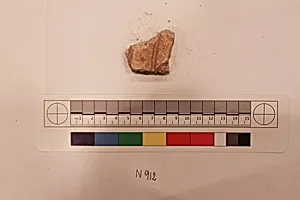
Medium
Stucco; carved, painted
Dimensions
H. 1 3/8 in. (3.5 cm) W. 1 3/8 in. (3.5 cm) D. 13/16 in. (2 cm)
Classification
Stucco
Department
Islamic Art
Museum
Metropolitan Museum of Art, New York, NY
Credit
Rogers Fund, 1948
Accession Number
48.101.1214
Rights
Public Domain
Art Historical Context
This delicate stucco fragment, dating to the 8th–12th century, a glimpse into the refined world of Islamic architectural decoration. Likely originating from a mosque, palace, or elite residence in the Islamic world—possibly regions like Iraq, Iran, or Egypt—it exemplifies the era's mastery of stucco a versatile plaster-like material molded into walls and vaults. At just 1⅜ inches square and deep, this diminutive piece (H. 1⅜ in., W. 1⅜ in., D. 13/16 in.) belies its cultural weight, acquired through the Rogers Fund in 1948 for the Metropolitan Museum of Art's Islamic Art collection. Crafted by an unknown artist, the fragment was intricately carved to create textured reliefs—perhaps floral, geometric, or arabesque motifs typical of the period—and then painted for vivid color and depth. Stucco's appeal lay in its affordability and workability compared to stone, allowing artisans to produce complex patterns that evoked paradise gardens or infinite cosmic orders, core themes in Islamic art. Paint enhanced these designs, with pigments often derived from minerals for enduring vibrancy. Though small and fragmented, it highlights the anonymity of Islamic craftsmen, whose genius lay in collective tradition rather than individual fame. Visitors can appreciate how such pieces transformed ordinary spaces into spiritual sanctuaries, bridging the Abbasid golden age through Seljuk innovations. A testament to enduring artistry! (198 words)