
Stucco Fragment
Unknown Artist
probably 8th–12th century
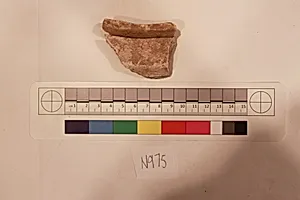
Medium
Stucco; carved, painted
Dimensions
H. 2 3/8 in. (6 cm) W. 1 15/16 in. (5 cm) D. 13/16 in. (2 cm)
Classification
Stucco
Department
Islamic Art
Museum
Metropolitan Museum of Art, New York, NY
Credit
Rogers Fund, 1948
Accession Number
48.101.1277
Rights
Public Domain
Art Historical Context
This delicate stucco fragment, likely from the 8th to 12th century, a glimpse into the refined artistry of early Islamic architecture. Housed in the Metropolitan Museum of Art's Islamic department, this tiny piece—measuring just 2 3/8 inches high—survives as a testament to the ornamental splendor of mosques, palaces, and homes across the Islamic world during a golden age of cultural flourishing. Crafted from stucco, a versatile plaster-like material prized for its moldability, the fragment was intricately carved in low relief and enhanced with paint, techniques that allowed artisans to create intricate patterns evoking floral motifs, geometric designs, or arabesques. These methods were hallmarks of Islamic decorative arts, where surface decoration transformed everyday spaces into realms of spiritual and aesthetic beauty, adhering to aniconic traditions that favored abstraction over figural representation. Though its exact provenance remains unknown, such fragments highlight the ingenuity of anonymous craftsmen whose work adorned structures from Persia to North Africa. Acquired through the Rogers Fund in 1948, it invites us to marvel at the enduring fragility of these ancient embellishments.