
Stucco Fragment
Unknown Artist
probably 8th–12th century
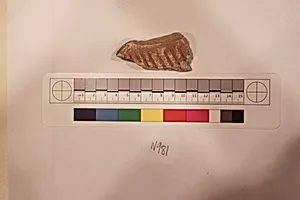
Medium
Stucco; carved
Dimensions
H. 2 3/8 in. (6 cm) W. 1 3/8 in. (3.5 cm) D. 9/16 in. (1.5 cm)
Classification
Stucco
Department
Islamic Art
Museum
Metropolitan Museum of Art, New York, NY
Credit
Rogers Fund, 1948
Accession Number
48.101.1283
Rights
Public Domain
Art Historical Context
This delicate stucco fragment, likely from the Islamic world between the 8th and 12th centuries, offers a tantalizing glimpse into the refined artistry of early medieval Islamic architecture. Measuring just 2 3/8 inches high, it survives as a testament to the grandeur of mosques, palaces, and madrasas, where such pieces adorned walls, arches, and mihrabs. During this era—spanning the Abbasid and Seljuk periods—stucco became a favored medium across regions like Iraq, Iran, and Central Asia, prized for its versatility and affordability compared to carved stone or wood. Carved with precision despite its diminutive size (1 3/8 inches wide and 9/16 inches deep), the fragment exemplifies the sophisticated techniques of Islamic artisans. Stucco, a mixture of lime plaster and aggregates, was molded, incised, and sometimes undercut to create intricate reliefs, often featuring geometric patterns, arabesques, or floral motifs that embodied the era's emphasis on harmony, infinity, and avoidance of human figuration. These designs not only beautified sacred and secular spaces but also symbolized spiritual concepts central to Islamic culture. Acquired through the Rogers Fund in 1948 and housed in the Metropolitan Museum of Art's Islamic Art department, this unassuming relic invites us to ponder the skilled hands behind lost masterpieces, bridging visitors to a vibrant chapter of global art history.