
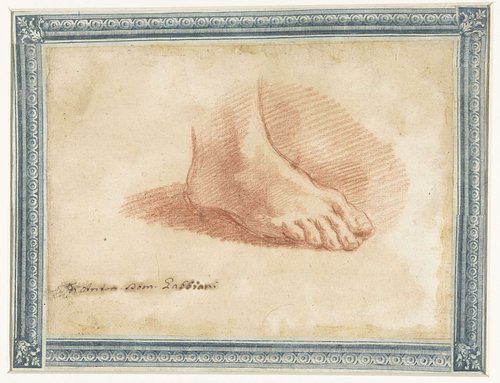
Studie van een voet
1662 - 1726
Medium
paper
Dimensions
153; 207
Rights
Public Domain
About this artwork
height 153 mm x width 207 mm
Art Historical Context
**Studie van een voetStudy of a Foot)***Anton Domenico Gabbiani (1652–1726)* Nestled among the preparatory sketches of Florence's vibrant Baroque era, Anton Domenico Gabbiani's *ie van een voet* the artist's meticulous focus on human anatomy. Created during Gabbiani's prolific career as a court painter for the Medici family, this small drawing on paper (153 × 207 mm) exemplifies preparatory studies that underpinned grand frescoes and portraits. Gabbiani, a pupil of the esteemed Cecco Bravo, mastered the late Baroque style, blending dynamic realism with elegant flourish, often drawing from live models to perfect form and proportion. Rendered on humble paper—a favored medium for quick, expressive sketches—this foot study highlights the technical precision essential to 17th-century Italian draftsmanship. Likely executed in black chalk or red chalk (common for such anatomical exercises), it reveals Gabbiani's keen observation of muscle tension, bone structure, and subtle shadows, skills honed in Florence's academies. These studies were not mere exercises but vital tools for larger commissions, reflecting the era's emphasis on naturalistic anatomy inspired by Renaissance masters like Michelangelo. For visitors, this intimate work offers a glimpse into the artist's studio, where everyday body parts became profound studies in light and volume. Imagine Gabbiani at his easel, foot poised before him— a reminder that Baroque grandeur began with such humble, human details.