
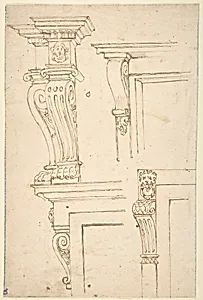
Studies for Consoles
16th century
Medium
Pen and ink
Dimensions
sheet: 10 5/8 x 7 1/8 in. (27 x 18.1 cm)
Classification
Drawings|Ornament & Architecture
Department
Drawings and Prints
Museum
Metropolitan Museum of Art, New York, NY
Credit
The Elisha Whittelsey Collection, The Elisha Whittelsey Fund, 1952
Accession Number
52.570.62
Rights
Public Domain
Tags
Art Historical Context
This delicate pen-and-ink drawing from sixteenth-century Italy captures a series of architectural studies for consoles—ornamental brackets used to shelves, cornices, or balconies. Created on a modest sheet measuring just over 10 by 7 inches, the work explores variations of these structural forms, many of them animated with expressive human faces. Such details reflect the Renaissance fascination with merging functional architecture with lively sculptural decoration, turning everyday building elements into miniature works of art. In the sixteenth century, Italian draftsmen frequently produced sheets like this as part of their workshop practice. These studies allowed artists and architects to experiment with proportion, ornament, and the human figure before committing ideas to stone or wood. The precise, fluid lines of pen and ink were ideal for rendering crisp profiles and subtle modeling, techniques that helped communicate designs clearly to patrons and craftsmen. Today the drawing offers visitors a rare glimpse into the creative process behind Renaissance ornament. Its focus on expressive faces integrated into architectural supports highlights how artists of the period infused even utilitarian structures with personality and narrative interest, bridging the worlds of sculpture, architecture, and drawing.