
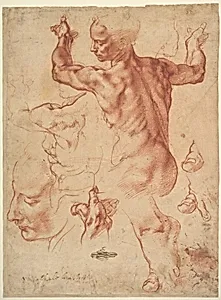
Studies for the Libyan Sibyl (recto); Studies for the Libyan Sibyl and a small Sketch for a Seated Figure (verso)
ca. 1510–11
Medium
Red chalk, with small accents of white chalk on the left shoulder of the figure in the main study (recto); soft black chalk, or less probably charcoal (verso)
Dimensions
Sheet: 11 3/8 × 8 7/16 in. (28.9 × 21.4 cm) Framed: 21 × 16 in. (53.3 × 40.6 cm)
Classification
Drawings
Department
Drawings and Prints
Museum
Metropolitan Museum of Art, New York, NY
Credit
Purchase, Joseph Pulitzer Bequest, 1924
Accession Number
24.197.2
Rights
Public Domain
Tags
Art Historical Context
This exquisite double-sided drawing by Michelangelo Buonarroti, around 1510–11, captures the artist's preparatory genius for one of his masterpieces: the Libyan Sibyl on the Sistine Chapel ceiling Commissioned by Pope Julius II the ceiling project transformed the Vatican's sacred space with prophetic figures like this muscular, dynamic woman, symbolizing ancient wisdom and divine inspiration. The recto features fluid studies of the Sibyl's twisting torso and powerful limbs, revealing Michelangelo's relentless pursuit of anatomical perfection amid the fresco's immense scale. Michelangelo's mastery shines in his innovative use of red chalk—a relatively new medium that allowed for soft, lifelike modeling of flesh tones, enhanced by subtle white chalk accents on the shoulder. The verso adds intimate sketches of the Sibyl and a seated figure in soft black chalk (or possibly charcoal), showcasing his economical, multi-purpose approach to paper. At just 11⅜ × 8⅞ inches, this sheet exemplifies Renaissance drawing as both study and standalone art. Acquired by The Metropolitan Museum of Art in 1924, it offers visitors a rare window into the High Renaissance titan’s process—where every contour pulses with energy, bridging pagan mythology and Christian theology in timeless beauty.
About the Artist
Michelangelo Buonarroti · 1475–1564
Michelangelo di Lodovico Buonarroti Simoni (1475–1564) stands as the quintessential figure of the Italian High Renaissance, a sculptor, painter, architect, and poet whose mastery across disciplines embodied the era's humanist ideals. Born on March 6, 1475, in Caprese within the Republic of Florence to a modest family—his father, Lodovico di Buonarroti Simoni, served as a minor magistrate—Michelang...