
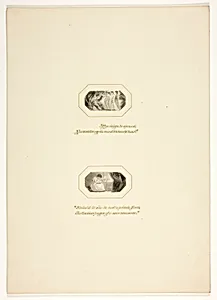
Study for a plate from The Triumphs of Temper, in the 1796 Royal Engagements Pocket Book
c. 1795
Medium
Ink wash on paper
Dimensions
2.5 × 5 cm (1 × 2 in.)
Classification
ink or chalk wash
Department
Prints and Drawings
Museum
Art Institute of Chicago
Accession Number
43052
Rights
Public Domain
Art Historical Context
This delicate ink wash study by Thomas Stothard captures a preparatory moment in the creation of illustrations for William Hayley’s popular 1781 poem *The Triumphs of Temper*. Created around 1795 for inclusion in the 1796 Royal Engagements Pocket Book, the tiny work—measuring just 2.5 by 5 centimeters—reflects the growing fashion for miniature art in portable almanacs and diaries. Stothard, a leading British illustrator of the late eighteenth century, specialized in graceful, narrative scenes drawn from literature, often blending neoclassical elegance with a light, sentimental touch. The ink wash medium allowed Stothard to explore tonal effects and composition quickly on paper before the design was engraved for print. Such studies reveal the artist’s meticulous process, translating poetic allegory into visual form for a wide audience of middle-class readers. Though small in scale, the drawing exemplifies how book illustration helped disseminate literary culture during the period. Today housed in the Art Institute of Chicago’s Prints and Drawings department, this intimate work offers a glimpse into the collaborative world of publishing and the enduring appeal of Stothard’s refined draftsmanship.
About the Artist
Thomas Stothard · 1755–1834
Thomas Stothard RA (1755–1834) was born on 17 August 1755 at the Black Horse Inn in London's Long Acre, the son of a prosperous publican originally from Stutton near Tadcaster. A delicate child, he was sent at age five to relatives in Yorkshire, attending schools in Acomb, Tadcaster, and later Ilford, Essex, where he honed his drawing skills by copying prints. Following his father's death in 1770,...