
Study for "Scientific Group"
Medium
figures
Classification
figures
Department
Smithsonian Collection
Museum
Smithsonian American Art Museum
Credit
Bequest of Erskine Hewitt
Accession Number
1942-50-256
Rights
Public Domain
About this artwork
Research in Progress
Art Historical Context
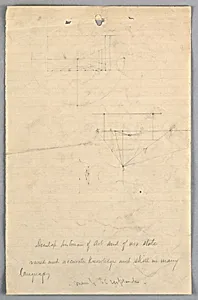
Daniel Huntington's *Study for "Scientific Group (1858) offers a fascinating glimpse into the preparatory process of a mid-19th-century American artist at work. Created as a figure study—likely in pencil or charcoal—this drawing served as a foundational sketch for Huntington's larger composition *Scientific Group*, capturing posed human forms with careful attention to anatomy and proportion. Huntington (1816–1906), a prominent figure in American art, was known for his realistic portrayals of historical, literary, and intellectual themes, reflecting the era's growing emphasis on science and progress during the antebellum period. As president of the National Academy of Design from 1862 to 1890, Huntington bridged neoclassical traditions with emerging American realism, often drawing inspiration from contemporary advancements. This study, part of the Smithsonian American Art Museum's collection (bequest of Erskine Hewitt), underscores the meticulous technique of 19th-century academic artists, who used such sketches to refine compositions before committing to oil on canvas. In an age of rapid scientific discovery—from Darwin's theories to American inventions—it evokes the intellectual curiosity of the time. Though research on this piece is ongoing, it invites visitors to appreciate the hidden labor behind grand paintings, reminding us how initial ideas evolve into cultural icons.