
Study of a Tree
Albert Bierstadt, ca. 1864
About this artwork
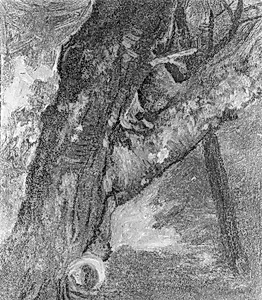
Albert Bierstadt's *Study of a Tree* (ca. 1864) captures the artist's keen eye for nature's intricate details during a pivotal era in American art. As a leading figure in the Hudson River School, Bier was renowned for his luminous, romantic landscapes that the grandeur of the American. This modest oil sketch, created amid his expeditions to document the Rockies and Yosemite, reflects the mid-19th-century fascination with Manifest Destiny and the sublime power of wilderness. Trees, often symbolic of enduring strength in his oeuvre, anchor many of his epic canvases, making this study a window into his preparatory process. Rendered in oil on paper mounted on board—a portable medium ideal for plein-air work—the 9¼ × 7⅞-inch piece showcases Bierstadt's masterful handling of light and texture. Delicate brushwork renders bark's rugged form and foliage's subtle gradations, hinting at the dramatic atmospheric effects that defined Luminism. Far from a finished masterpiece, it reveals the meticulous observation fueling his monumental paintings, like those exhibited to acclaim in New York during the Civil War years. Housed in The Metropolitan Museum of Art's American Wing as a gift from Mr. and Mrs. Maurice Glickman in 1976, this intimate work invites visitors to appreciate the groundwork of artistic genius. It underscores Bierstadt's role in shaping America's visual identity, blending scientific precision with poetic reverence for the land.