
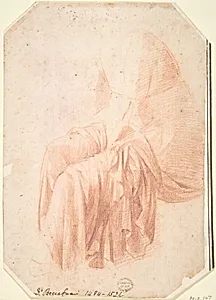
Study of Drapery (Probably After the Antique)
1520–40
Medium
Red chalk
Dimensions
8-1/8 x 5-5/8 in. (20.6 x 14.3 cm); maximum (all four corners have been cut)
Classification
Drawings
Department
Drawings and Prints
Museum
Metropolitan Museum of Art, New York, NY
Credit
Gift of Cornelius Vanderbilt, 1880
Accession Number
80.3.167
Rights
Public Domain
Art Historical Context
Domenico Beccafumi (1486–1551), a leading Sienese Mannerist, created this delicate red-chalk drawing between 1520 and 1540 as a careful study of fabric folds. Known for his expressive use of and elongated forms, Beccafumi here focuses on the way cloth drapes over an unseen figure, most likely copied from a classical statue. Such studies were essential practice for Renaissance and Mannerist artists preparing compositions for paintings or frescoes. Red chalk was prized in the sixteenth century for its warm tone and ability to capture subtle gradations of shadow and texture. By working on a small sheet—now trimmed at the corners—Beccafumi could quickly explore how light plays across creases and gathers, translating sculptural volume into the language of drawing. The sheet’s modest size and intimate handling invite viewers to appreciate the quiet discipline behind grander works. Today in the Metropolitan Museum’s collection, the drawing offers a glimpse into the artist’s working process and the enduring Renaissance dialogue with antiquity. It reminds us that even the most accomplished painters began with patient observation of simple materials—here, a length of cloth rendered in a few strokes of red chalk.
About the Artist
Domenico Beccafumi · 1484–1551
Italian artist. Comment on works: History