
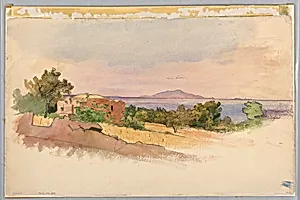
Study of landscape, Sorrento
Medium
landscapes
Classification
landscapes
Department
Smithsonian Collection
Museum
Smithsonian American Art Museum
Credit
Gift of Mrs. Roger H. Plowden
Accession Number
1969-121-26
Rights
Public Domain
About this artwork
Research in Progress
Art Historical Context
William Stanley Haseltine, a prominent American landscape painter of the mid-19th century (5–1900), captured the dramatic beauty of Sorrento's coastline in this 1858 *Study of Landscape, Sorrento*. At just 23 years old,eltine was immersed in his European travels, having left the United States in 1855 to study paint abroad. Sorrento, perched on Italy's Amalfi Coast, offered rugged cliffs, sparkling bays, and Mediterranean light that inspired his precise, luminous depictions of nature. This work reflects his early fascination with European scenery, bridging American Romanticism and emerging Luminist tendencies toward serene, atmospheric realism. As a "study," this piece likely served as a preparatory sketch, emphasizing observation over finish— a common practice for artists honing their skills on site. Haseltine's technique favored meticulous detail in rock formations and water effects, evoking the grandeur of the Hudson River School while infusing a brighter, more crystalline quality from his Italian sojourns. Now in the Smithsonian American Art Museum's collection (gift of Mrs. Roger H. Plowden), it showcases his role in bringing international landscapes to American audiences, highlighting transatlantic artistic exchange during a transformative era. Though research continues, this intimate study invites visitors to appreciate Haseltine's eye for nature's poetry, reminding us how 19th-century artists turned personal journeys into timeless visual records.