
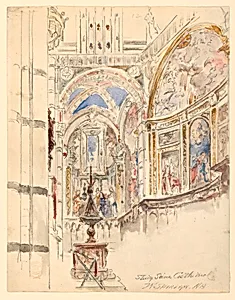
Study of Siena Cathedral
Classification
architecture, interiors
Department
Smithsonian Collection
Museum
Smithsonian American Art Museum
Credit
Gift of Mrs. Walter Shirlaw
Accession Number
1912-16-106
Rights
Public Domain
About this artwork
Research in Progress
Art Historical Context
Walter Shirlaw's *Study of Siena Cathedral*ca. 1872) offers a captivating glimpse into one of Italy's most iconic Gothic masterpieces. Born in Scotland and later an influential American artist and illustrator, Shirlaw was renowned for his meticulous detail and Pre-Raphaelite-inspired. Active in New York City's vibrant art scene, he contributed to magazines like *Harper's Weekly* before turning to fine art. This architectural study, likely sketched during European travels common among 19th-century American artists, captures the intricate interiors of Siena's Duomo—a 13th-century marvel famed for its black-and-white striped marble, golden mosaics, and soaring vaults. Classified as an architectural interior, the work reflects the era's fascination with medieval European cathedrals, which symbolized spiritual grandeur and technical ingenuity. Shirlaw's precise rendering highlights the play of light on ornate details, a technique honed through his engraving background, inviting viewers to appreciate the harmonious blend of engineering and artistry. Housed in the Smithsonian American Art Museum as a gift from the artist's widow, this piece underscores Shirlaw's bridge between illustration and high art. Though research continues, it evokes the cultural exchange that shaped American tastes, reminding us how distant wonders like Siena inspired creativity back home.