
Sugar bowl
Medium
Platinum, blue glass
Dimensions
5 1/4 × 7 in. (13.3 × 17.8 cm)
Classification
Metalwork-Gold and Platinum
Culture
French, Paris
Department
European Sculpture and Decorative Arts
Museum
Metropolitan Museum of Art, New York, NY
Credit
Purchase, Gift of Dr. and Mrs. A.L. Garbat, Manya Garbat Starr and Julian A. Garbat, by exchange, and Harris Brisbane Dick Fund, 1974
Accession Number
1974.164a–c
Rights
Public Domain
Tags
Art Historical Context
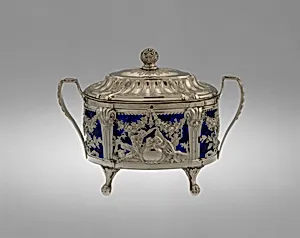
In the opulent world of late 18th-century French arts, Marc-Etienne Janety's *Sugar Bowl* of 1786 stands out as a pioneering masterpiece. Crafted in Paris during the waning years of the Ancien Régime, this vessel measures 5¼ × 7 inches and combines gleaming platinum with vibrant blue glass. Janety, a master goldsmith appointed as the official platinum worker to King Louis XVI, was at the forefront of metallurgical innovation. Platinum, newly introduced to Europe from South American mines, was notoriously difficult to refine and shape—far harder than gold—yet Janety perfected techniques to cast and chase it, creating a lustrous, silvery-white surface that evoked purity and luxury. Adorned with playful motifs of grapes, nymphs, and satyrs, the bowl draws from classical mythology, evoking Bacchic revels amid Louis XVI's courtly extravagance. These frolicsome figures, likely chased in high relief on the platinum body, celebrate abundance and sensual delight, a nod to the era's neoclassical fascination with antiquity blended with lingering Rococo whimsy. The blue glass liner adds a jewel-like contrast, enhancing its use as a table centerpiece for serving sugar—a rare, status-symbol commodity imported from the colonies. Housed in The Metropolitan Museum of Art's European Sculpture and Decorative Arts collection, this rare platinum object underscores France's leadership in luxury metalwork on the eve of revolution. Janety's innovation not only elevated platinum from scientific curiosity to artistic medium but also foreshadowed its enduring role in high-end craftsmanship. A true gem for admirers of Enlightenment-era elegance!