
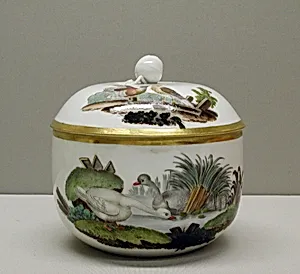
Sugar bowl
ca. 1775
Medium
Hard-paste porcelain
Dimensions
Overall (bowl .5a, confirmed): 2 3/4 × 4 1/4 × 4 1/4 in. (7 × 10.8 × 10.8 cm); Overall (lid .5b, confirmed): 1 1/2 × 4 3/8 × 4 3/8 in. (3.8 × 11.1 × 11.1 cm)
Classification
Ceramics-Porcelain
Culture
German, Höchst
Department
European Sculpture and Decorative Arts
Museum
Metropolitan Museum of Art, New York, NY
Credit
Gift of Mercedes Bass, 2007
Accession Number
2007.243.5a, b
Rights
Public Domain
Tags
Art Historical Context
This delicate sugar bowl, crafted by the renowned Höchst Manufactory 1775, exemplifies the pinnacle of 18th-century German porcelain. Produced in the Electorate of Hesse, Höchst was one of Europe's leading hard-paste porcelain factories, rivaling Meissen in technical prowess. Hard-paste porcelain, fired at high temperatures for exceptional durability and translucency, marked a breakthrough in European ceramics, allowing intricate shapes and vibrant decorations that mimicked costly Chinese imports. Measuring just over 2¾ inches tall with its lid, this lidded vessel likely formed part of an elegant table service, where sugar—a rare luxury from the colonial trade—was displayed and served during tea rituals. The Höchst style, rooted in the ornate Rococo aesthetic, favored playful motifs like birds and ducks (as suggested by its decorative tags), painted in vivid enamels overglaze and fired for lasting color. These whimsical avian details added a touch of nature's charm to aristocratic homes, blending functionality with fanciful artistry. Today, housed in The Metropolitan Museum of Art's European Sculpture and Decorative Arts Department (gift of Mercedes Bass, 2007), it invites us to savor the era's opulence and innovation in everyday elegance.