
Sugar Bowl
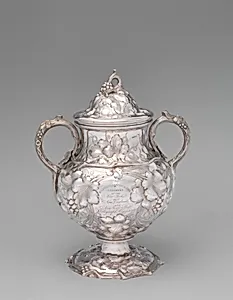
Medium
Silver
Dimensions
Overall: 8 15/16 x 7 1/8 x 5 5/16 in. (22.7 x 18.1 x 13.5 cm); 25 oz. (776.9 g) Foot: Diam. 4 11/16 in. (11.9 cm) Body: H. 7 1/8 in. (18.1 cm); 21 oz. 8 dwt. (664.9 g) Cover: 2 1/8 x 3 9/16 in. (5.4 x 9 cm); 3 oz. 12 dwt. (112 g)
Classification
Sugar Bowl
Culture
American
Department
The American Wing
Museum
Metropolitan Museum of Art, New York, NY
Credit
Gift of Mrs. F. R. Lefferts, 1969
Accession Number
69.141.2a, b
Rights
Public Domain
Tags
Art Historical Context
This exquisite silver sugar bowl, crafted 1850 by the New York silversmith Ball, Tompkins and in collaboration with John C., exemplifies the opulence of mid-19th-century American domestic silver. Measuring nearly 9 inches tall and weighing a substantial 25 ounces, it was designed for affluent households, where such pieces formed part of elaborate tea services symbolizing wealth and refined taste. The Rococo Revival style, popular during this era, is evident in its ornate form, likely adorned with grape motifs—a tag highlighting the lush, naturalistic fruit clusters that evoked abundance and the era's fascination with nature-inspired luxury. As a product of New York's thriving silver industry, the bowl showcases masterful chasing and repoussé techniques, where silver is hammered to create raised, intricate designs. These methods allowed artisans like Moore, a leading figure in American silver production, to achieve both durability and artistic flair. Donated to the Metropolitan Museum of Art's American Wing in 1969 by Mrs. F. R. Lefferts, it offers a window into antebellum America's social rituals, where silver tableware displayed status amid growing industrialization. Today, this sugar bowl invites visitors to appreciate the craftsmanship that bridged European traditions and American innovation, a testament to the nation's emerging cultural sophistication.
About the Artist
Ball, Tompkins and Black|John C. Moore (American|American) · 1826 |1839 –1863 |1851
baptized 1799, active New York, 1826–63|active 1839–51