
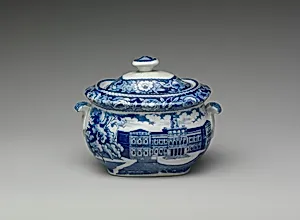
Sugar Bowl
ca. 1826–ca. 1836
Medium
Earthenware, transfer-printed
Dimensions
H. 4 3/4 x 6 1/8 in. (12.1 x 15.6 cm)
Classification
Sugar bowl
Culture
British (American market)
Department
The American Wing
Museum
Metropolitan Museum of Art, New York, NY
Credit
Gift of Mildred R. Mottahedeh, 1982
Accession Number
1982.371a, b
Rights
Public Domain
Tags
Art Historical Context
This elegant sugar bowl, crafted by British potter Joseph Stubbs between 1826 and 1836, exemplifies the refined tableware exported to American households during the early nineteenth century. Made of earthenware with transfer-printed decoration, the piece measures just under five inches high and features delicate motifs of buildings and flowers. Produced in Staffordshire, England, specifically for the American market, it reflects the thriving transatlantic trade in ceramics that brought stylish, affordable goods to growing middle-class homes across the Atlantic. Transfer printing, the technique used here, revolutionized ceramic decoration by allowing intricate designs to be reproduced efficiently from engraved copper plates. This method enabled detailed scenes and floral patterns to adorn everyday objects like this sugar bowl, making artistic embellishment accessible beyond luxury porcelain. Such pieces were often part of larger tea or dinner services, underscoring the social rituals of hospitality and refinement in American domestic life. Now part of the Metropolitan Museum of Art’s American Wing, the bowl—generously gifted by Mildred R. Mottahedeh in 1982—offers a tangible connection to the cultural exchanges that shaped early American material culture. Its charming blend of architectural and natural imagery invites viewers to appreciate both the technical ingenuity and aesthetic tastes of the period.