
Sugar Bowl
ca. 1810
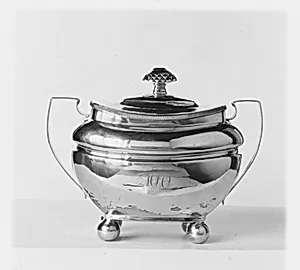
Medium
Silver
Dimensions
Overall: 6 1/4 x 8 x 4 15/16 in. (15.9 x 20.3 x 12.5 cm); 14 oz. 17 dwt. (462.6 g) Body: H. 5 3/16 in. (13.2 cm); 11 oz. 18 dwt. (370 g) Cover: 1 3/4 x 5 x 3 1/2 in. (4.4 x 12.7 x 8.9 cm); 3 oz. (92.6 g)
Classification
Sugar Bowl
Culture
American
Department
The American Wing
Museum
Metropolitan Museum of Art, New York, NY
Credit
Bequest of Alphonso T. Clearwater, 1933
Accession Number
33.120.552a, b
Rights
Public Domain
Art Historical Context
Crafted around 1810 by American silversmith Garret Forbes, this elegant sugar bowl exemplifies the refined craftsmanship of early 19th-century American decorative arts. Made of solid silver, it measures 6¼ x 8 x 4⅞ inches overall, weighing a substantial 14 ounces and 17 pennyweights—evidence of its high quality and heft, with the body at 11 ounces and 18 pennyweights, and the cover separately proportioned for a snug fit. Displayed in The American Wing of the Metropolitan Museum of, it entered the collection through the 1933 bequest of Alphonso T. Clearwater. In the Federal period, silver sugar bowls like this one were prized possessions in affluent households, symbolizing hospitality and social status amid America's growing prosperity post-Revolution. Forbes, active in New York, specialized in such functional yet luxurious tableware, blending British influences with emerging American tastes. The precise hand-hammering and seaming techniques highlight silversmithing skill, where weight and balance ensured both durability and aesthetic appeal for serving tea or coffee. This piece offers a tangible glimpse into everyday elegance of the early republic, inviting visitors to imagine it gracing a mahogany sideboard during lively gatherings. Its preservation underscores the cultural value of American silver as both art and heirloom.