
Sugar Bowl
1835–45
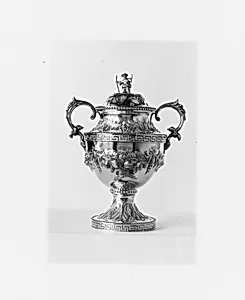
Medium
Silver
Dimensions
Overall: 10 1/4 x 7 7/8 x 5 1/2 in. (26 x 20 x 14 cm); 28 oz. 11 dwt. (887.5 g) Body: H. 8 1/2 in. (21.6 cm); 24 oz. 13 dwt. (766.8 g) Cover: 2 1/2 x 3 7/8 in. (6.4 x 9.8 cm); 3 oz. 18 dwt. (120.7 g)
Classification
Sugar Bowl
Culture
American
Department
The American Wing
Museum
Metropolitan Museum of Art, New York, NY
Credit
Bequest of Alphonso T. Clearwater, 1933
Accession Number
33.120.570
Rights
Public Domain
Tags
Art Historical Context
This exquisite silver sugar bowl, crafted the skilled brothers Robert and William Wilson between 1835 and 1845, stands as a fine example of American decorative arts from the early Victorian era. Measuring 10¼ x 7⅞ x 5½ inches overall and weighing nearly 29 troy ounces (including detailed breakdowns for body and cover), it reflects the precision and heft prized in high-end silverware. Adorned with motifs of men and flowers—likely chased or engraved for texture and elegance—the bowl's design blends figurative and floral elements, evoking the neoclassical influences popular in American households. As a functional yet luxurious piece for tea services, it highlights the craftsmanship of mid-19th-century silversmiths, who used coin silver (90% pure) for durability and shine. Such objects symbolized prosperity in antebellum America, gracing the tables of affluent families during social rituals like afternoon tea. Now housed in The Metropolitan Museum of Art's American Wing, this sugar bowl entered the collection through the 1933 bequest of Alphonso T. Clearwater. Visitors can appreciate how it captures the era's blend of utility, artistry, and cultural refinement—perfect for envisioning a bygone world's refined domesticity.