
Sugar Bowl
ca. 1800
Medium
Silver
Dimensions
Overall: H. 9 15/16 in. (25.2 cm); 11 oz. 13 dwt. (362.1 g) Lip: Diam. 4 1/4 in. (10.8 cm) Foot: 2 7/8 x 2 13/16 in. (7.3 x 7.1 cm) Body: H. 6 1/16 in. (15.4 cm); 7 oz. 8 dwt. (230.9 g) Cover: 4 x 4 in. (10.2 x 10.2 cm); 4 oz. 4 dwt. (131.2 g)
Classification
Sugar Bowl
Culture
American
Department
The American Wing
Museum
Metropolitan Museum of Art, New York, NY
Credit
Gift of Miss Annie-May Hegeman, 1928
Accession Number
28.94.1a, b
Rights
Public Domain
Art Historical Context
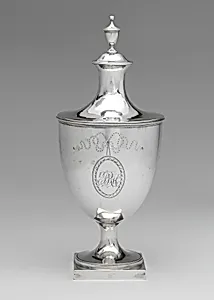
This elegant silver sugar bowl, created around 1800 by the American silversmiths Joel and John Sayre, stands as a fine example of early national craftsmanship. Measuring nearly ten inches in height with a separate cover, the piece was fashioned from over eleven ounces of silver and reflects the careful handwork typical of objects made for refined households. Its presence in the Metropolitan Museum’s American Wing highlights the growing tradition of domestic silver production in the young United States. In the years following the Revolution, silver vessels like this one served both practical and social purposes. They were central to the tea table, where the ritual of serving sweetened tea demonstrated hospitality and status. The substantial weight and balanced proportions of the bowl suggest it was designed for everyday elegance rather than mere display, embodying the restrained yet sophisticated taste of the Federal era. Generously given to the museum in 1928 by Miss Annie-May Hegeman, the sugar bowl invites visitors to appreciate how American artisans transformed a precious metal into lasting symbols of refinement and cultural identity.