
Sugar bowl with cover (part of a service)
Unknown Artist
1790–1800
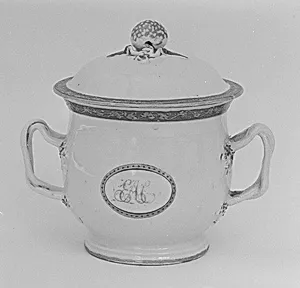
Medium
Hard-paste porcelain
Dimensions
Height (with cover): 5 3/8 in. (13.7 cm)
Classification
Ceramics-Porcelain-Export
Culture
Chinese, probably for British market
Department
European Sculpture and Decorative Arts
Museum
Metropolitan Museum of Art, New York, NY
Credit
Helena Woolworth McCann Collection, Gift of Winfield Foundation, 1951
Accession Number
51.86.109a, b
Rights
Public Domain
Art Historical Context
This delicate sugar bowl with cover, from 1790–1800, is a fine example of Chinese export porcelain for the British market. just 5 3/8 inches (13.7 cm) tall, it formed part of a larger servicelikely a tea set—reflecting the Georgian era's obsession with elegant tableware. During this time, European powers like Britain imported vast quantities of Chinese ceramics through trading companies such as the East India Company, turning everyday rituals like tea-drinking into displays of refined taste and global sophistication. Crafted from hard-paste porcelain, the bowl showcases China's mastery of high-fired clay bodies, which achieve exceptional strength, translucency, and a resonant "ping" when tapped. This medium revolutionized export wares, allowing intricate shapes and durable finishes that suited Western dining habits while adapting traditional Chinese forms. Such pieces bridged cultures, embodying the lucrative porcelain trade that peaked in the late 18th century and influenced British design. Housed in the Metropolitan Museum of Art's European Sculpture and Decorative Arts Department as part of the Helena Woolworth McCann Collection, this sugar bowl invites us to savor the artistry of anonymous Chinese potters and the era's vibrant East-West exchanges.