
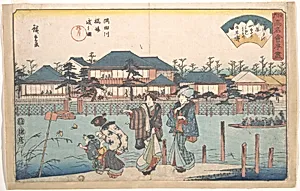
江戸高名会亭尽 隅田川橋場渡之図 柳屋|Sumidagawa Hashiba Watashi Zu (Yanagiya)
ca. 1835–42
Medium
Woodblock print; ink and color on paper
Dimensions
H. 9 in. (22.9 cm); W. 13 7/8 in. (35.2 cm)
Classification
Prints
Culture & Period
Japan · Edo period (1615–1868)
Department
Asian Art
Museum
Metropolitan Museum of Art, New York, NY
Credit
Rogers Fund, 1919
Accession Number
JP1163
Rights
Public Domain
Tags
Art Historical Context
Utagawa Hiroshige1797–1858), one of Japan's most celebrated ukiyo-e masters, captures the vibrant riverside life of Edo ( Tokyo) in this woodblock print from series *Edo Kōmeikaitei-zu* (Famous Teah of the Eastern Capital), circa 1835–42. Titled *Sumidagawa Hashibaashi-zu (Yanagiya)*, it depicts the popular Yanagiya teah at the Hashiba ferry on the Sum River, a bustling hub for travelers and pleasure-seekers during the Edo period (1615–1868). Hiroshige's keen eye for atmospheric detail brings to life elegant women in kimonos, likely courtesans or geisha, gathered amid boats gliding on the water and sturdy riverside buildings. The print exemplifies ukiyo-e's "pictures of the floating world," celebrating ephemeral urban pleasures through Hiroshige's signature style: delicate lines, subtle gradations of color achieved via multi-block printing, and a masterful use of perspective to evoke depth and movement. The soft blues and greens of the river contrast with the warm hues of clothing and architecture, drawing viewers into the lively scene. This artwork offers a window into Edo's thriving entertainment culture, where teahouses like Yanagiya served as social gathering spots for poetry, music, and boat excursions. Acquired through the Rogers Fund in 1919, it's a gem in the Metropolitan Museum of Art's Asian Art collection, highlighting the technical innovation and poetic beauty of Japanese printmaking.
About the Artist
Utagawa Hiroshige · 1826–1869
Utagawa Hiroshige (1797–1858), born Andō Tokutarō, was the last great master of Japanese ukiyo-e woodblock printmaking and one of the most influential landscape artists in history. Born in Edo (modern Tokyo) into a low-ranking samurai family serving as fire wardens, Hiroshige transformed landscape printmaking into a poetic meditation on nature, weather, and everyday life. His revolutionary approac...